Tanmay Singh

Fourth Year Ph.D. Student | Astrophysics

Hi! I am Tanmay, currently a PhD student in the School of Earth and Space Exploration at Arizona State University, advised by Prof. Sanchayeeta Borthakur. My research interests lie broadly in galaxy formation and processes that impact their evolution, primarily using cosmological simulations.

News

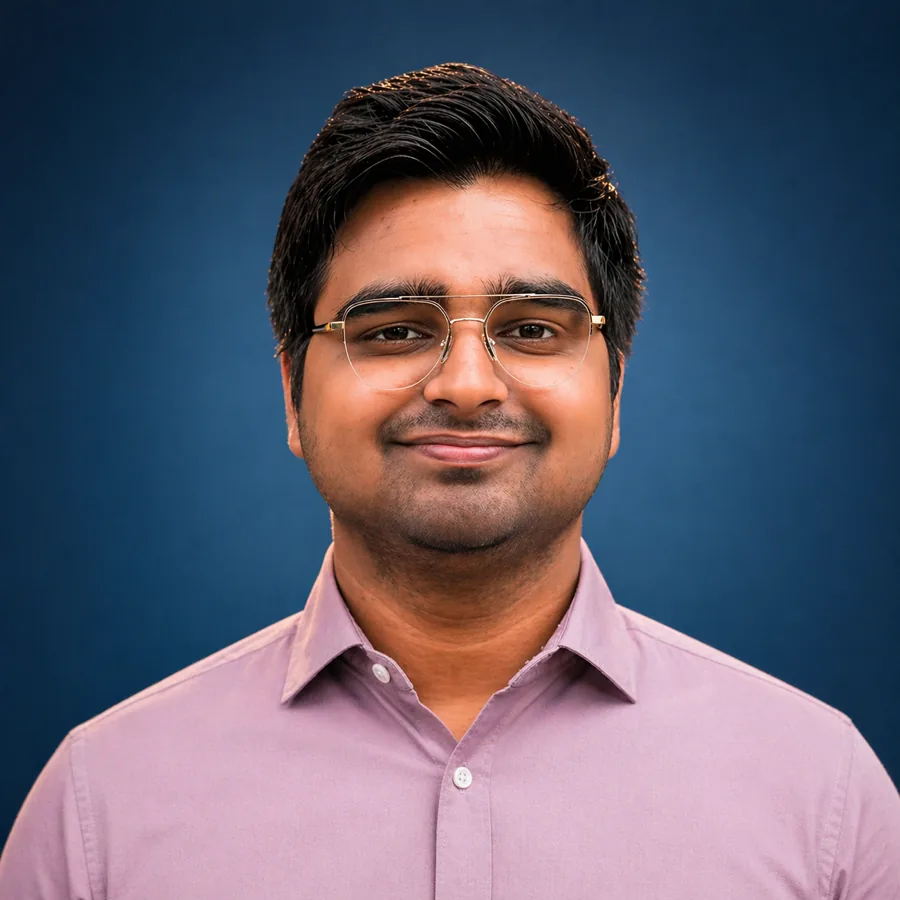
Portrait of Tanmay Singh
Plate I T. Singh, ASU SESE, 2026

Background and current focus

Prior to coming to ASU, I completed my B.Tech in Engineering Physics from the Indian Institute of Technology Delhi in July 2023. I also worked as a visiting student at the Raman Research Institute in Bangalore from May to July 2022. I was born and brought up in Lucknow, India.

My current research uses cosmological simulations and synthetic quasar absorption spectra to study gas associated with galaxies and galaxy groups. I also work on probabilistic spectral classification of AGN and supernovae using Bayesian logic. You can read more about the current projects in the research section, and about non-academic interests under Personal Interests.

Current role
Ph.D. Student in Astrophysics
Institution
Arizona State University
School
School of Earth and Space Exploration
Undergraduate
B.Tech, Engineering Physics, IIT Delhi

Ongoing research projects

Project 1 of 5

O VI in the Intra-group Medium

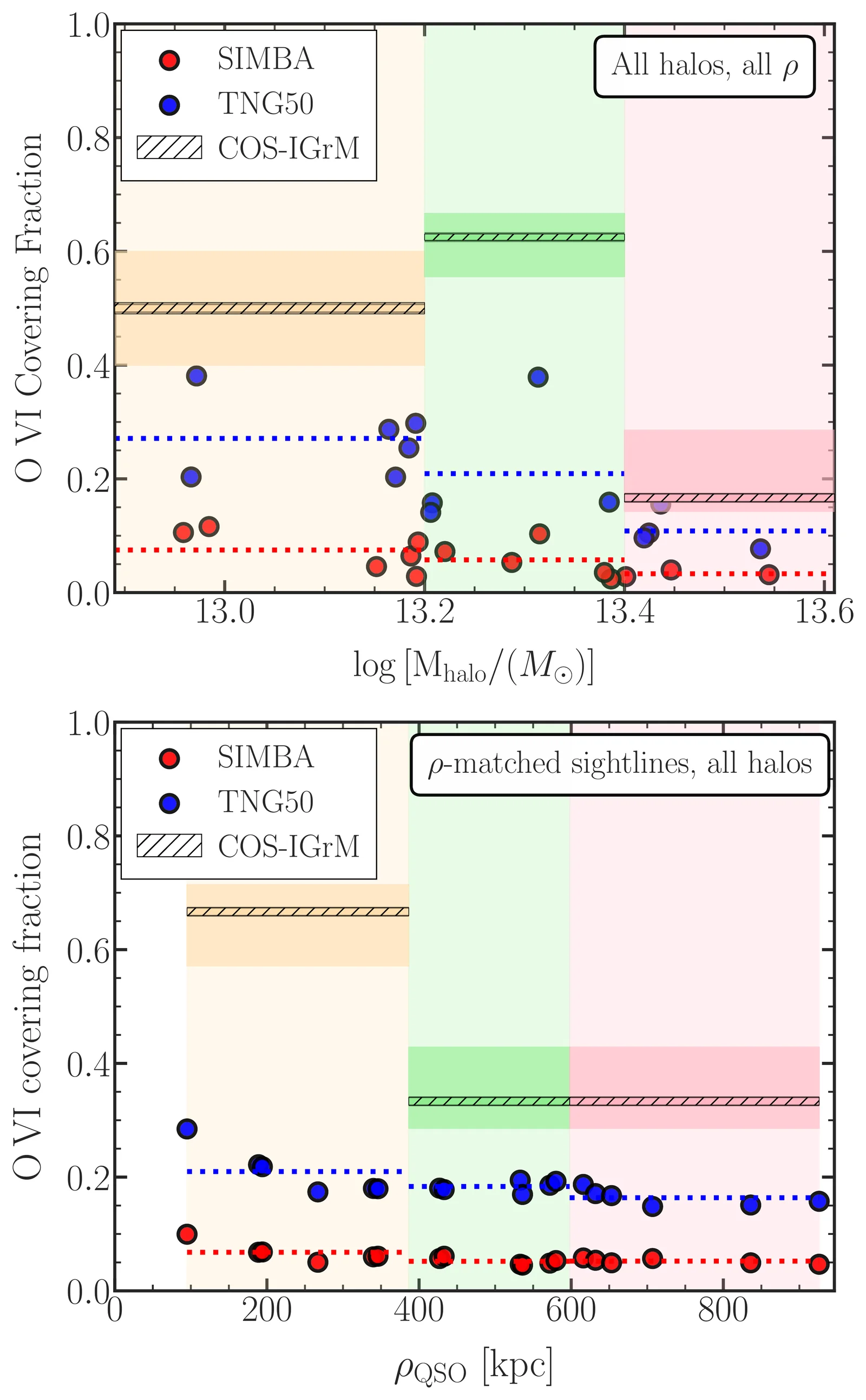
I compare O VI absorption in synthetic quasar spectra of 14 galaxy groups each from TNG50 and SIMBA, with 90,000 sightlines per group, against the COS-IGrM survey. Both simulations fall short of the observed covering fraction: 20.6 ± 2.6% in TNG50 and 6.0 ± 0.8% in SIMBA, against 44 ± 5% in COS-IGrM. About 95% of the simulated absorbers are gravitationally bound, and in TNG50 the strongest sit within about 200 kpc of star-forming galaxies, which SIMBA does not show. I published this as a first-author paper in The Astrophysical Journal.

TNG50 SIMBA COS-IGrM HST/COS G130M CLOUDY XGBoost
O VI covering fraction against group halo mass in three bins. In every bin the TNG50 (blue) and SIMBA (red) means fall below the hatched COS-IGrM observations; SIMBA is lowest.
In every halo-mass bin, simulated groups show O VI along fewer sightlines than COS-IGrM observed (hatched): TNG50 in blue, SIMBA in red. Figure 5 (top panel), Singh et al. 2026, ApJ 1003, 110; from arXiv:2604.18808, CC BY 4.0.

Spectral Classification of AGN and Supernovae

I am building a contingent Bayesian-logic (BLOG) model that classifies AGN and supernova spectra from emission-line detections, widths and ratios. The model includes dust attenuation and variability, and a line-fitting and identification pipeline I built informs its priors. Along the way I wrote a BLOG language extension for VS Code, with syntax highlighting, available on the VS Code Marketplace and GitHub. I work on this with Prof. Siddharth Srivastava and Dr. Rolf Jansen.

BLOG AGN Supernovae Emission-line ratios Dust attenuation VS Code extension

Kinematics of the Outer Circumgalactic Medium

I am looking for co-rotating and counter-rotating gas in the outer circumgalactic medium of L* galaxies, using sightline-based synthetic spectroscopy in TNG50-1. I have produced about 75,000 synthetic spectra in Lyα, C II λ1334 and Si III λ1206, and I am now classifying their kinematics and working through the uncertainties.

TNG50-1 Lyα C II λ1334 Si III λ1206 Trident

Earlier research

Past work spanning submillimeter astronomy, solar physics, quantum communication, image processing, and atomic collisions.

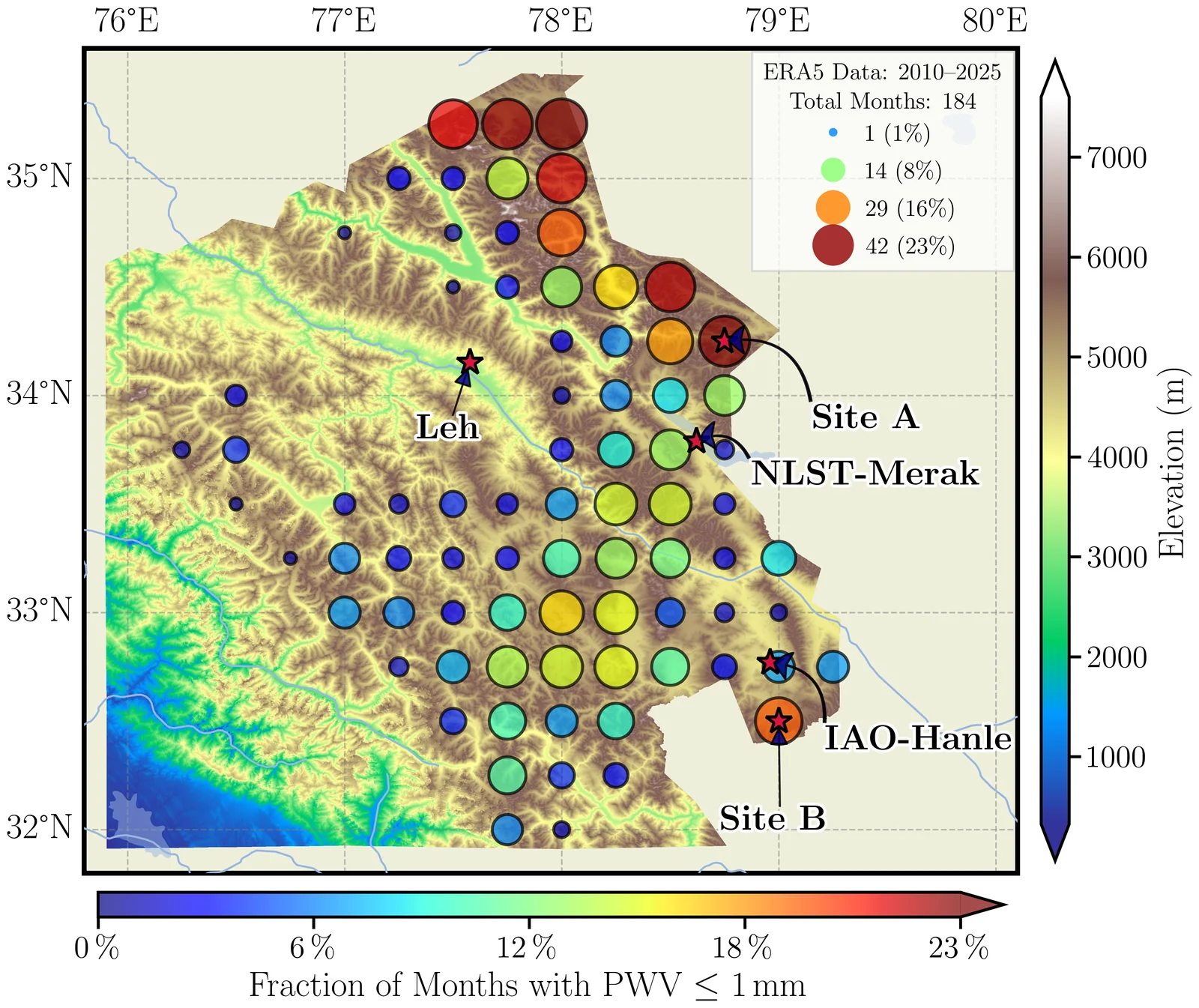
Map of the Ladakh plateau on shaded relief. Bubbles on the ERA5 grid show the share of months with PWV at or below 1 mm, up to about 23%; the largest and reddest lie in the northeast. Site A, Site B, Leh, Merak and Hanle are labelled.
Share of months from 2010 to 2025 with PWV ≤ 1 mm in each ERA5 grid cell across Ladakh. Sites A and B outdo the cells holding Hanle and Merak. Figure 6, Singh, Sathyanarayana Rao & Basu Thakur 2026, AJ 171, 331; from arXiv:2604.13487, CC BY 4.0.

Site quality analysis for an Indian submillimeter telescope

Raman Research Institute

I mapped precipitable water vapor (PWV) across Ladakh from 184 months of ERA5 reanalysis (2010–2025), after checking ERA5 against radiometer data at Hanle, Mauna Kea and Chajnantor. Two candidate regions reach PWV ≤ 1 mm for about 23% and 19% of that period, against about 5% and 8% for the Hanle and Merak grid cells. I began this as a visiting student with Prof. Mayuri S. Rao at the Raman Research Institute in 2022 and published it as a first-author paper in The Astronomical Journal in 2026.

ERA5 PWV am code Ladakh IAO Hanle
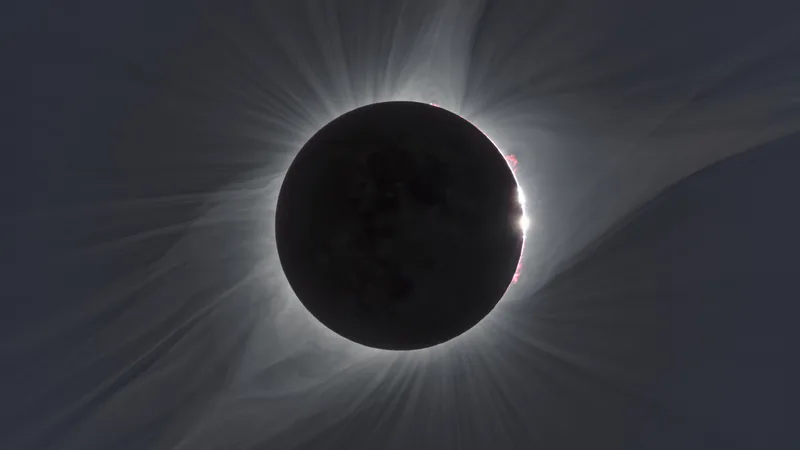
The Moon's dark disc covers the Sun during the 2017 total eclipse; a pale corona of fine radial streamers and loops spreads outward, with small red prominences at the right edge.
The corona at totality, 21 August 2017 (multi-exposure composite); its fine structure traces the Sun's magnetic field. “The total solar eclipse of 21 August 2017” by ESO/P. Horálek/Solar Wind Sherpas project, CC BY 4.0.

Magnetic field topology in the 2017 eclipse corona

Senior thesis, IIT Delhi

I cleaned and aligned images of the 2017 total solar eclipse using phase correlation and unsharp masking, then retrieved the corona's closed and open magnetic field lines with the RHT and ACF methods. The aim was to check that topology against the MHD equations. I did this with Prof. Suprit Singh in 2022–2023.

2017 eclipse Phase correlation Unsharp masking RHT ACF MHD
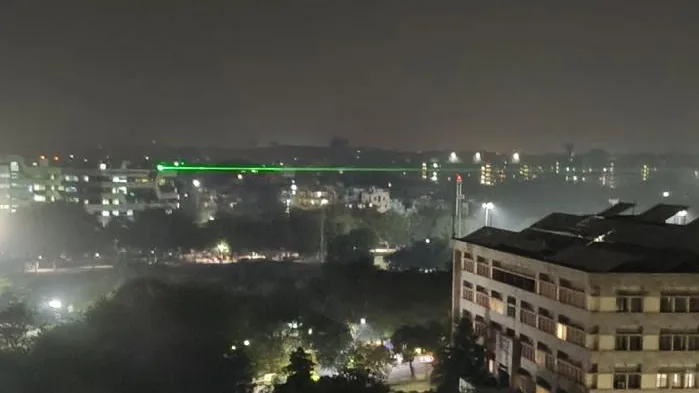
Night view over the IIT Delhi campus: a thin green laser beam crosses the skyline above trees and lit buildings, with a multi-storey building in the foreground at right.
Entanglement-based free-space quantum key distribution over more than 1 km across the IIT Delhi campus, demonstrated in 2025 by the research group of Prof. Bhaskar Kanseri. Photo: Press Information Bureau.

Post-processing for entanglement-based QKD

SURA 2021, IIT Delhi

With Paras Sharma, I wrote Python software for the post-processing stage of entanglement-based quantum key distribution: several Cascade reconciliation variants, privacy amplification and networking. I verified it on experimental data from Prof. Bhaskar Kanseri’s lab at IIT Delhi. The project was selected for SURA 2021 from 27 proposals in the Physics and Electrical departments, and was recognised for exemplary results.

Entanglement-based QKD Cascade Privacy amplification Python
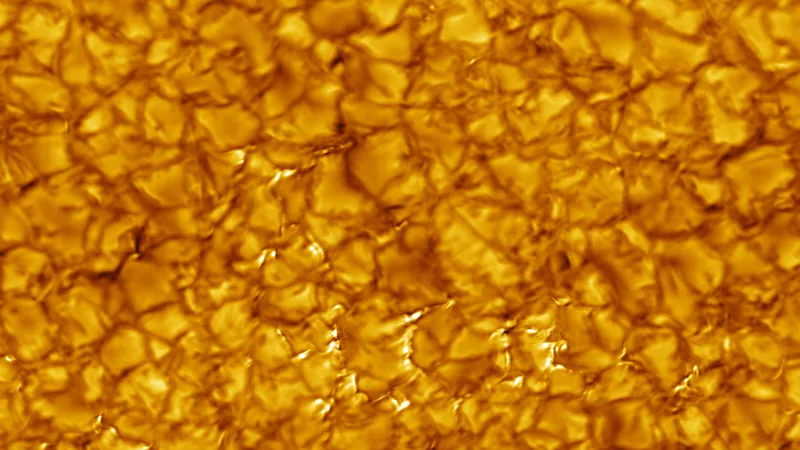
Close-up of the Sun's surface: bright, irregular convection cells about 1,000 km across, separated by narrow dark lanes, in yellow-orange false colour.
Solar granulation from NSF's Inouye Solar Telescope (G band, 3 June 2022). Near-surface convection like this excites the Sun's acoustic waves. Inouye Solar Telescope inauguration observations by NSO/AURA/NSF, CC BY 4.0.

Identifying acoustic wave sources on the Sun

Solar data

I studied acoustic waves at the solar surface in simulated MURaM data, and located their sources with image-processing methods such as azimuthal averaging in OpenCV and NumPy.

MURaM OpenCV Azimuthal averaging NumPy
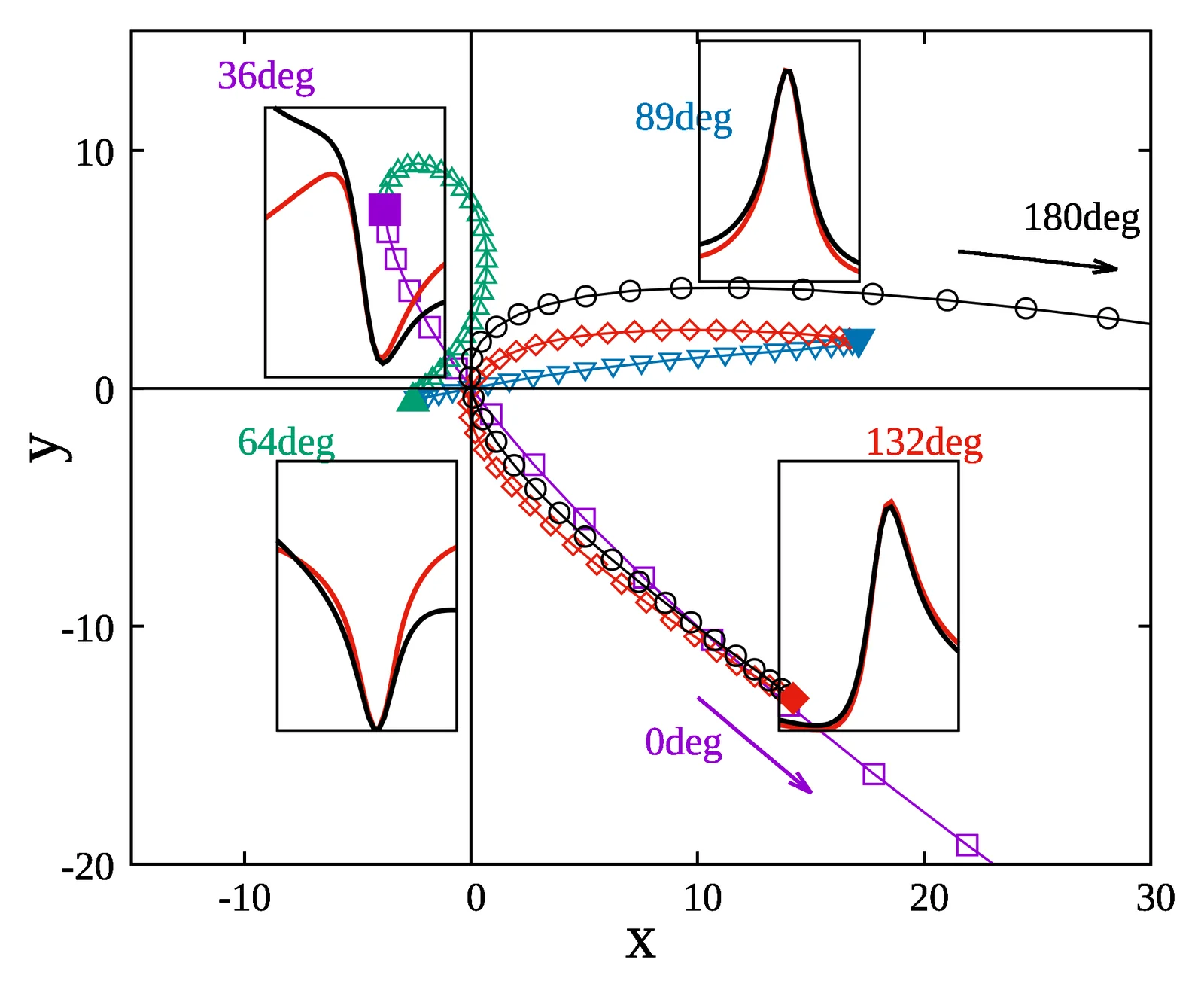
The complex plane, with the path the parameter w traces as the scattering angle runs from 0 to 180 degrees. Insets at 36, 64, 89 and 132 degrees show resonance peaks and dips of different shapes.
In cold H–Kr collisions the complex parameter w traces a smooth path as the scattering angle changes, while the Fano profile changes shape (insets at 36°, 64°, 89° and 132°). Fig. 5, Singh et al. 2026, Indian J. Phys. 100, 2179 © 2026 IACS.

Angle-dependent Fano profiles in cold atomic collisions

Atomic collisions

I studied how the asymmetry of Fano resonance profiles changes with scattering angle, using a complex-valued w parameter that gives an angle-dependent Fano q. For the orbiting resonance in cold H–Kr elastic scattering, computed with the VPA phase-shift program, the asymmetry varies strongly with angle and is sensitive to the interatomic potential. I did this with Prof. Fumihiro Koike and Prof. Yoshiro Azuma, and published it as a first-author paper in the Indian Journal of Physics in 2026.

Fano q parameter H–Kr scattering Orbiting resonance VPA program Code Ocean

Publications and abstracts

Analysis of synthetic O VI absorption associated with galaxy groups in SIMBA and TNG50 simulations

2026ApJ 1003, 110First author

T Singh, S Borthakur, D Nelson, R Davé, T McCabe

Site Quality Analysis for an Indian Submillimeter Telescope: A Reanalysis-Based Approach

2026AJ 171, 331First author

T Singh, M Sathyanarayana Rao, R Basu Thakur

Scattering angle dependence of Fano resonance profiles in cold atomic collisions analyzed with the complex valued w parameter

2026Indian J. Phys. 100, 2179–2187First author

T Singh, RA Singh, F Koike, M Iizawa, Y Azuma

Lighting up the circumgalactic medium: strong, jet-aligned Hα emission around radio galaxies

2026ApJL 1009, L34Co-author

N Roy, S Borthakur, T Heckman, T Singh

Journal arXiv

Revealing cosmic ecosystems with the Hubble Space Telescope in 2030s and beyond

2026White paper, HST STScI callSecond author

S Borthakur, T Singh, D French, et al.

arXiv

Analysis of synthetic O VI absorption in galaxy groups of SIMBA and IllustrisTNG simulations

2026American Astronomical Society Meeting Abstracts 247, 174.05

T Singh, S Borthakur, D Nelson, T McCabe

Talks and posters

Invited talks

  • Jul 2026

    From O VI in Galaxy Groups to the Multiphase Gas Around Galaxies

    ROE, Univ. of Edinburgh

  • May 2026

    From Simulations to Spectra: Probing the Intragroup Medium with O VI

    SOTU Seminar, TIFR, Mumbai

Contributed talks

  • Jun 2026

    Inferring CGM Cloud Properties Using Simulation-Based Inference

    SBI for Galaxy Evolution 2026, Cambridge

  • Sep 2022

    Looking at the Sky through Radio Eyes: 21-cm Cosmology

    Student Lecture, IIT Delhi

  • Jul 2022

    Preliminary Site Quality Analysis for an Indian Sub-mm Telescope

    VSM Presentation, RRI, Bengaluru

Posters

  • Jan 2026

    Analysis of Synthetic O VI Absorption in Galaxy Groups of SIMBA and IllustrisTNG

    AAS 247, Phoenix, AZ

  • Aug 2025

    Scaling Synthetic Absorption Spectroscopy for IllustrisTNG

    URSSI Summer School for Open Science

Awards, observing and service

Awards

  • 2024, 2026

    Summer Exploration Graduate (SEG) Fellowship, School of Earth and Space Exploration, ASU

  • 2023

    PanIIT USA Graduate Scholarship

  • 2022

    Preliminary discovery of 3 asteroids, DST-IASC Asteroid Search Campaign

  • 2021

    Summer Undergraduate Research Award (SURA), IIT Delhi; selected from 27 proposals

  • Jan 2021

    International Theoretical Physics Olympiad: Rank 12 of 276 teams

  • Nov 2020

    University Physics Competition: Silver Medal (top 12 of 340 teams), Ion Thrusters to Saturn

Observing and service

  • Aug 2025 – Present

    International Student Advocate, SESE Graduate Council

  • Oct–Nov 2023

    Co-PI, 12m Telescope (AZ): Connecting Molecular Gas to the CGM

    51 hrs of CO(1–0)

  • Sep 2023

    Co-PI, Hectochelle (AZ): Unveiling the Hidden Disks of Nearby Galaxies

Education

Aug 2023 - Present

Ph.D. in Astrophysics

Arizona State University | School of Earth and Space Exploration

Current graduate research includes O VI in the intra-group medium, spectral classification of AGN and supernovae, and kinematics of the outer circumgalactic medium.

May 2022 - July 2022

Visiting Research Intern

Raman Research Institute | Astronomy and Astrophysics Department

Worked on preliminary site-quality analysis for an Indian sub-millimeter telescope.

July 2019 - July 2023

B.Tech. in Engineering Physics

Indian Institute of Technology Delhi

Undergraduate training in engineering physics, with research spanning solar physics, quantum secure communication, atomic collisions, and submillimeter astronomy.

AST 531: Graduate Galaxies & Cosmology

Role: Guest Instructor

Institution: Arizona State University | Department: School of Earth and Space Exploration (SESE)

Semester: Fall 2026

AST 121: Introduction to Astronomy Laboratory

Role: Teaching Assistant, three lab sections

Institution: Arizona State University | Department: School of Earth and Space Exploration (SESE)

Semester: Spring 2025

I taught and supervised three lab sections: lectures, grading, and telescope-based experiments and night-sky observing.

Personal Interests

Chess Books Geography Music Astrophotography

Outside of my academic life, I have a diverse range of interests that keep me engaged and inspired. One of my favorite pastimes is playing chess. I would be happy to connect if you also play on chess.com; my username is Voyager972. Reading books is another passion of mine, particularly pop-science and non-fiction.

I have a keen interest in geopolitics and geography. Music and singing also play a significant role in my life; I particularly enjoy ghazals, Sufi music, and old Hindi songs.

I am also interested in astrophotography and aspire to capture the beauty of the night sky. Although I have not had the chance to pursue it as actively as I would like, it remains a goal I look forward to developing in the future.

Thank you for visiting my page. Feel free to reach out if you share similar interests or just want to connect.

Get in touch

Tanmay Singh

Send me a message here, or find me on any of these.